

By Edoardo, Kiesse, and Milly
Classical languages may sometimes feel like subjects belonging only to the past. But studying them gives students a lot: it strengthens language skills, helps us understand literature and culture, and builds strong thinking skills such as analysis and interpretation. Although importantly, the term classical languages often encompasses a wider range of linguistic and cultural traditions, in the context of the IB Diploma Programme (DP), it refers more narrowly to Latin and Classical Greek only.
Inviting students into curriculum conversations matters, because it helps ancient texts feel relevant to today’s learners. In 2025, after a competitive selection process, the three of us (university classics students) were invited to join a DP curriculum design project about the future of Latin and Classical Greek. We worked with teachers, examiners, and curriculum managers to help choose a new set of texts for the course. We shared what it feels like to meet these texts as a learner today, and what makes classical subjects meaningful and engaging.
From learner to collaborator
Until recently, we mainly knew Latin and Greek from the student side. We had supportive teachers and mentors, and we had done some tutoring and teaching too. But collaboration usually meant either learning from teachers, or teaching other students.
This project was different. We worked alongside teachers and examiners as part of one team with a shared goal. Our views were taken seriously and considered alongside those of experienced educators. We were asked to explain our reasoning, respond to critique, and improve our ideas through discussion.
Why student perspectives make a difference
Students often have a good instinct for what will interest other students. When you meet a text for the first time, you notice details and moments that stand out right away, sometimes different from what is usually highlighted in traditional teaching.
The best part of the process was comparing our first-hand reading experience with teachers’ long-developed interpretations, and talking openly about the differences. For example, discussions about the theme of war, and how it can resonate today for young people, felt especially important.
Learning through sharing texts
One of the most rewarding parts of studying classics has always been sharing what we learn with others. Before working with the IB, we all taught classics through private tutoring, and one of us co-wrote a Latin textbook on Vergil.
Some of the best moments with ancient texts happen when you talk about them with people reading them for the first time. Thinking about teenagers in the 2030s, we expect they’ll ask different questions, and those fresh perspectives can reveal meanings we might miss on our own. That sense of shared discovery is a big reason we were excited to take part.
When we helped select texts, we were drawn to passages that challenged or surprised us the first time and still do when we return to them. We also valued passages that are especially interesting from a language point of view, because students can learn a lot from the grammar and close reading these sections require.

Greek and Latin as more than school subjects
For us, Greek and Latin are much more than academic subjects. Ancient texts open up whole worlds and make us reflect on our own. They don’t simply hand us fixed “values”; they help us see beliefs in context, what has lasted over time, and what has changed. Ideas about friendship, politics, love, and power are still extremely relevant, while other parts remind us how different societies were. The more we read these authors, the more we notice how constant some parts of human nature can be. Thucydides famously believed his work would remain relevant as long as human nature stayed the same, and that is one reason we still read him today.
Making classics engaging for new generations
Classical texts (like classical music) are sometimes seen as hard to access. But the problem is often not the material itself, it’s how it is presented. Greek and Latin writing is not only serious and tragic; it can also be playful, funny, ironic, and surprising.
That is why, when discussing new text selections, we argued for variety. Alongside major authors like Homer and Vergil, we also supported the inclusion of less familiar or lighter texts. Greek literature, in particular, contains sharp humour that many students enjoy. Showing the full emotional range of these works can help students connect with classical languages, not just analyze them.
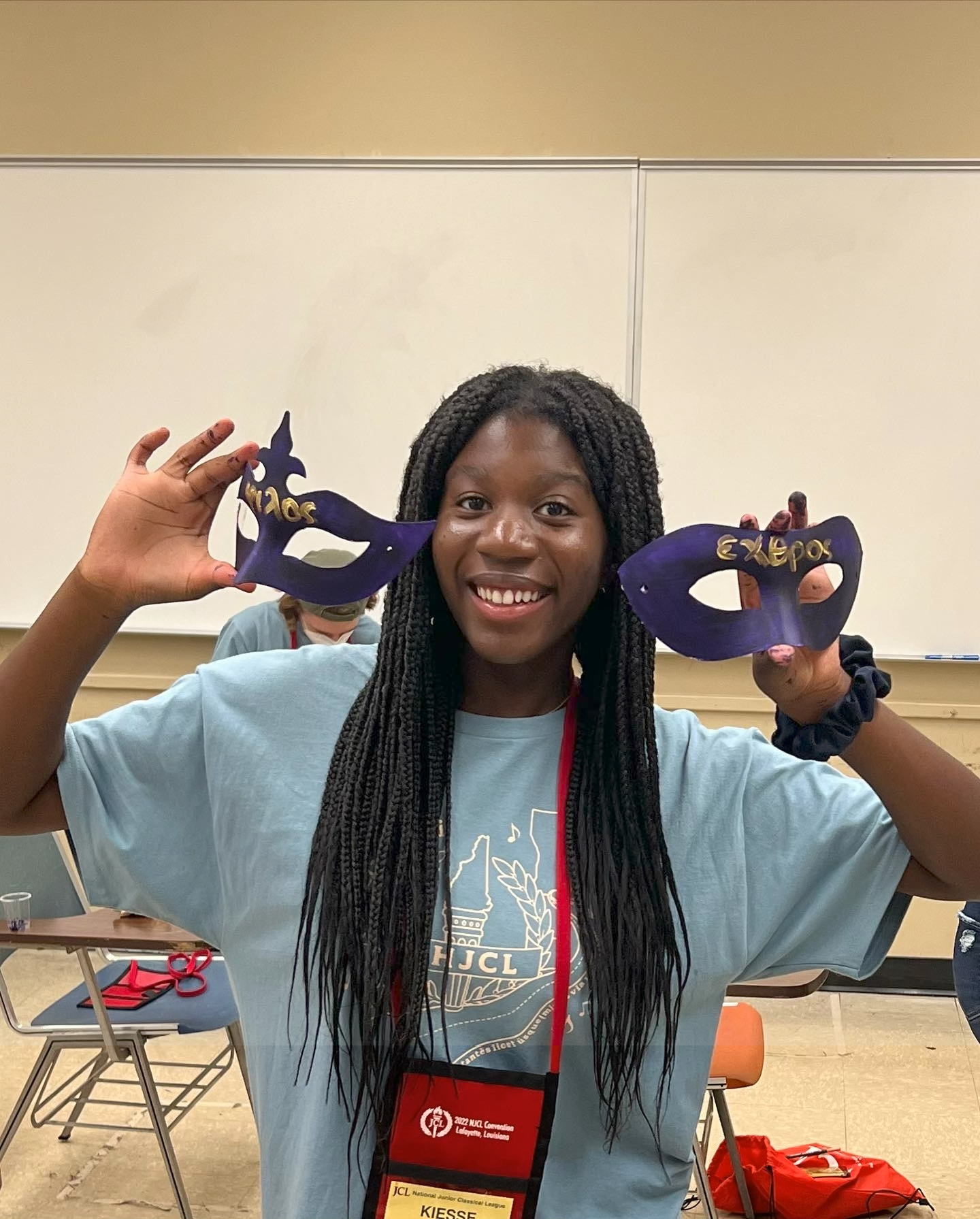
Why classical languages still matter today
Language shapes how societies think, record history, and express what matters to them. If you want to understand a culture in depth, you need to understand its language. Learning about the foundations of long-established cultures also helps us understand why parts of today’s world work the way they do.
Studying Latin and Greek lets students engage directly with foundational texts of Western literature rather than depending only on other people’s interpretations. This supports deeper, more critical thinking about ideas that still influence politics, literature, philosophy, and law.
Beyond cultural knowledge, learning Latin and Classical Greek also build useful skills. Their grammatical precision trains close attention to detail and careful analysis, and it can provide a strong foundation for learning other languages too.
Connecting students across cultures and countries
Latin and Classical Greek can connect students across cultures because they do not directly belong to any single modern nation. As “dead” languages, they can also put students on more equal footing, whatever their nationality or background.
Around the world, IB DP Latin and Classical Greek students read many of the same texts, myths, and historical voices. They often wrestle with similar questions about love, identity, power, morality, and responsibility. This shared experience supports dialogue across borders and fits closely with the IB’s emphasis on intercultural understanding.
Being heard and shaping the future
Being part of a process where student voices genuinely influenced curriculum decisions was encouraging and formative. Our ideas were listened to but also questioned, sometimes challenged and refined, and that was exactly what made the experience worthwhile.
We also left even more convinced that younger perspectives can bring new priorities to very old texts. The final selections aim to balance today’s sensibilities with ancient contexts, respecting tradition while still responding to future learners.
Interested in helping to shape the future of the IB?
Our advice is simple: do it. Whether you studied the IB or a different curriculum, you probably remember what you would have liked to change or develop. Getting involved gives you a real chance to represent those views with the benefit of hindsight, while also thinking constructively about how the DP course can improve for future students.
In the IB, each generation of students and educators can help refine the curriculum for those who follow. The impact is real: input can directly shape how students experience the curriculum. The IB’s focus on intercultural understanding and critical thinking also makes the work feel purposeful.
If you have strong opinions about a curriculum, whether as a student or a teacher, taking part in future IB changes is a practical way to make sure those ideas are heard and to improve the experience for the next generation.
Takeaways
- Latin and Greek are not only about the past; they help students think critically about culture, language, and ideas that still shape modern life.
- Student input can make curriculum choices more relevant, because students notice what engages first-time readers.
- Working as true collaborators helps students develop confidence, clarity, and stronger ideas through debate and feedback.
- Classical languages can bring students together internationally, since shared texts create shared conversations across countries and backgrounds.
- Emotional and thematic variety, including lighter, humorous, or less familiar passages can make Latin and Greek feel more approachable.
