

By Luciana Francis, Head of Science, Bishop Mackenzie International School, Malawi
What happens when you take science out of the classroom and into one of Africa’s most important conservation areas?
That was the question we explored when our Diploma Programme science students travelled to Liwonde National Park in southern Malawi for their Collaborative Sciences Project (CSP). Set along the Shire River, Liwonde is known for its biodiversity and conservation work, as well as the complex environmental challenges facing the park.
Our goal was simple: to help students experience science in the real world, working across disciplines to investigate genuine conservation issues.
We also used the collaborative project as an opportunity to strengthen their skills for Internal Assessment.
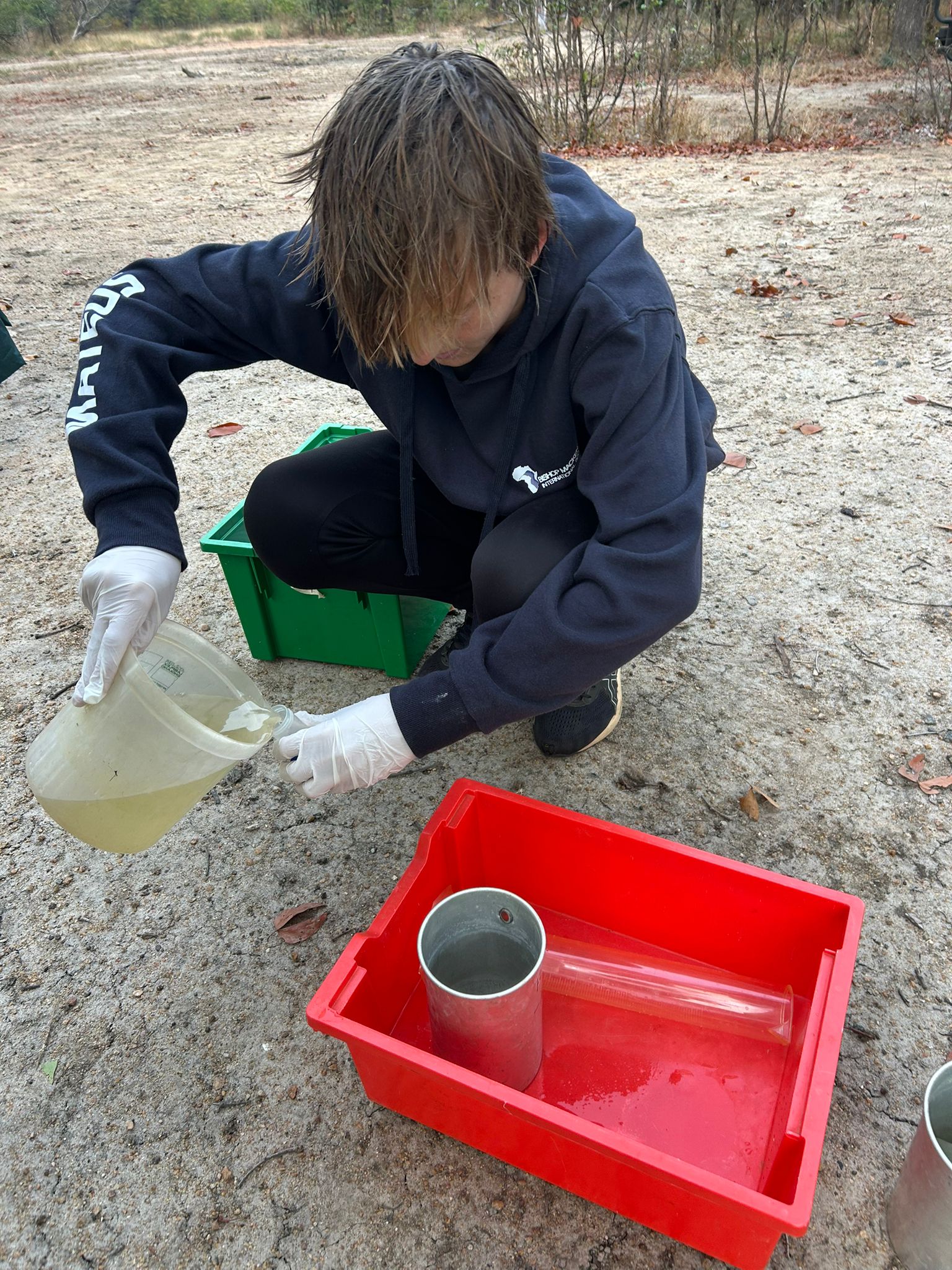
Over several days, they designed and carried out research projects on water quality, invasive species, waste management and human-wildlife interactions. What they discovered went far beyond science.
Real-world problems don't fit neatly into one subject
Students quickly saw that issues such as biodiversity loss, invasive species and water quality require knowledge from multiple scientific disciplines. One project on water hyacinth combined biology, physics, chemistry and design as students examined its impact on aquatic ecosystems, measured water quality and proposed practical aeration solutions.
The experience reinforced that meaningful scientific inquiry often happens at the intersection of subjects. It also showed students that complex problems are best understood when different perspectives are brought together.
This was where the CSP added real value: students were not working in isolation, but learning how collaboration across sports science, biology, chemistry, design and environmental science thinking can lead to stronger, more practical solutions.
The field is the ultimate classroom
Nothing prepares students for fieldwork quite like being in the field itself.
Each day started before sunrise, with students boarding boats on the Shire River or heading out on game drives to collect data. As conditions shifted, they learned that real science is rarely predictable.
Working in a dynamic environment pushed students to adapt their methods, think critically and make decisions in real time. Science became something they experienced rather than simply studied.
Challenges often create the best learning opportunities
Not everything went according to plan, and that was part of the learning.
We encountered equipment failures, calibration issues and environmental obstacles that forced students to rethink and adapt their approaches.
Students responded as scientists: recalibrating equipment, repeating trials, adjusting methods and documenting limitations in their evaluations.
Watching them respond with resilience and creativity was one of the most rewarding aspects of the project.
Conservation is as much about people as it is about wildlife
Many students arrived expecting conservation to focus mainly on animals and habitats. By the end, they had a much broader perspective.
One group explored the human impact of living and working alongside wildlife, while another looked at how organic waste from the camp could become compost to improve soil health.
These projects highlighted an important reality: conservation is as much about helping people as it is about wildlife. Through the CSP, students saw that human and planetary flourishing are closely connected — protecting ecosystems also means supporting human wellbeing, sustainable livelihoods and strong, resilient communities .

Science can inspire lifelong curiosity and action
Perhaps the most memorable moment came during our end-of-day reflection circle.
When students shared what they had learned about themselves, their responses showed how transformative the project had been.
They spoke about gaining confidence, overcoming uncertainty, working in teams and seeing the relevance of science to real-world challenges. Many also left with a clearer sense of future study or career pathways in areas such as environmental science, ecology, wildlife management, sports physiology and sustainable engineering.
For me, this captured the true value of the CSP: students became active researchers, able to ask meaningful questions and seek evidence-based solutions.
Looking back, lessons that stand out
Leading this project strengthened my belief in experiential, inquiry-based learning. Liwonde gave students an unforgettable setting for discovery. Still, the most important outcomes were the skills they developed: adapting, collaborating, questioning, problem-solving and thinking about environmental issues as part of wider systems.
Takeaways
- Real-world environmental challenges need joined-up thinking across scientific disciplines.
- Collaboration, complex problem solving and systems thinking are essential scientific skills.
- Fieldwork helps students experience science as active, unpredictable and relevant.
- Unexpected challenges can become some of the strongest learning moments.
- Conservation is about people, communities and ecosystems flourishing together.
- Science education can build confidence, curiosity and a lasting commitment to action.
