

By Leticia Giovacchini, DP Coordinator, Escuela Municipal Paula Albarracín de Sarmiento, Buenos Aires, Argentina
When people hear “International Baccalaureate,” they often think of elite private schools. At Escuela Municipal Paula Albarracín de Sarmiento, a publicly managed school in Vicente López, Buenos Aires, our experience tells a different story.
As a school rooted in its local community, we believe high-quality, internationally minded education should not be limited by a family’s income. Offering the IB Diploma Programme (DP) has been both challenging and deeply rewarding, and it continues to shape who we are as a school.
Who we are and what we stand for
Our school is governed by the Secretariat of Education of the Municipality of Vicente López. We are proud to be a public school highly valued by families for our strong academic standards and the wide range of projects and activities we offer students.
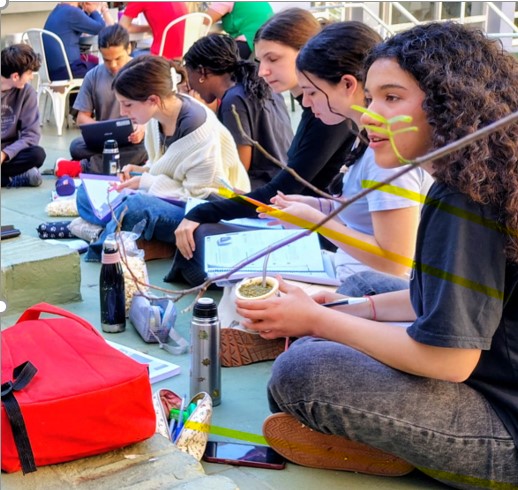
Our mission is holistic education. We focus not only on academic achievement but also on social and emotional development. Our goal is for students to leave us ready for higher education, the world of work, and active, responsible citizenship.
Why we chose the Diploma Programme
In 2015, we recognized something important: our educational philosophy already aligned closely with the IB approach. Inquiry-based learning, critical thinking, reflection and student responsibility were not new ideas for us.
What was new was the ambition to offer an internationally recognized qualification, previously available only in private schools, to students in a public institution.
After extensive planning and coordination between the school, the municipal education team and the local legislative council, we received authorization from both the municipality and the IB. Our first DP cohort began in 2018 and graduated in 2019.
How the programme is funded and supported
Government support is essential to making the DP possible in our context.
- The municipal government covers the annual IB fee, teacher salaries and all mandatory IB training.
- Families pay examination fees, which keep the programme financially viable.
- Academically, we receive ongoing guidance from the municipal education team, especially around implementation and alignment.
This shared responsibility model has been key to sustaining the programme.
Who can join the Diploma Programme?
Each year, we support up to 50 DP students per cohort.
The process begins in October with information meetings for students and families. Interested students submit an application form and take part in an individual interview. Decisions are made collaboratively by the School Guidance Team, Leadership Team and DP Coordination Team.
We do consider academic performance and students’ time commitments; many are competitive athletes or involved in intensive extracurricular activities, but motivation and genuine interest matter most. Our aim is not to filter out, but to welcome students who want to commit to the journey.
Because our students have generally been part of the school community for years, issues related to equity or background differences are minimal, and external applications are not currently accepted.
Introducing the IB English certificate
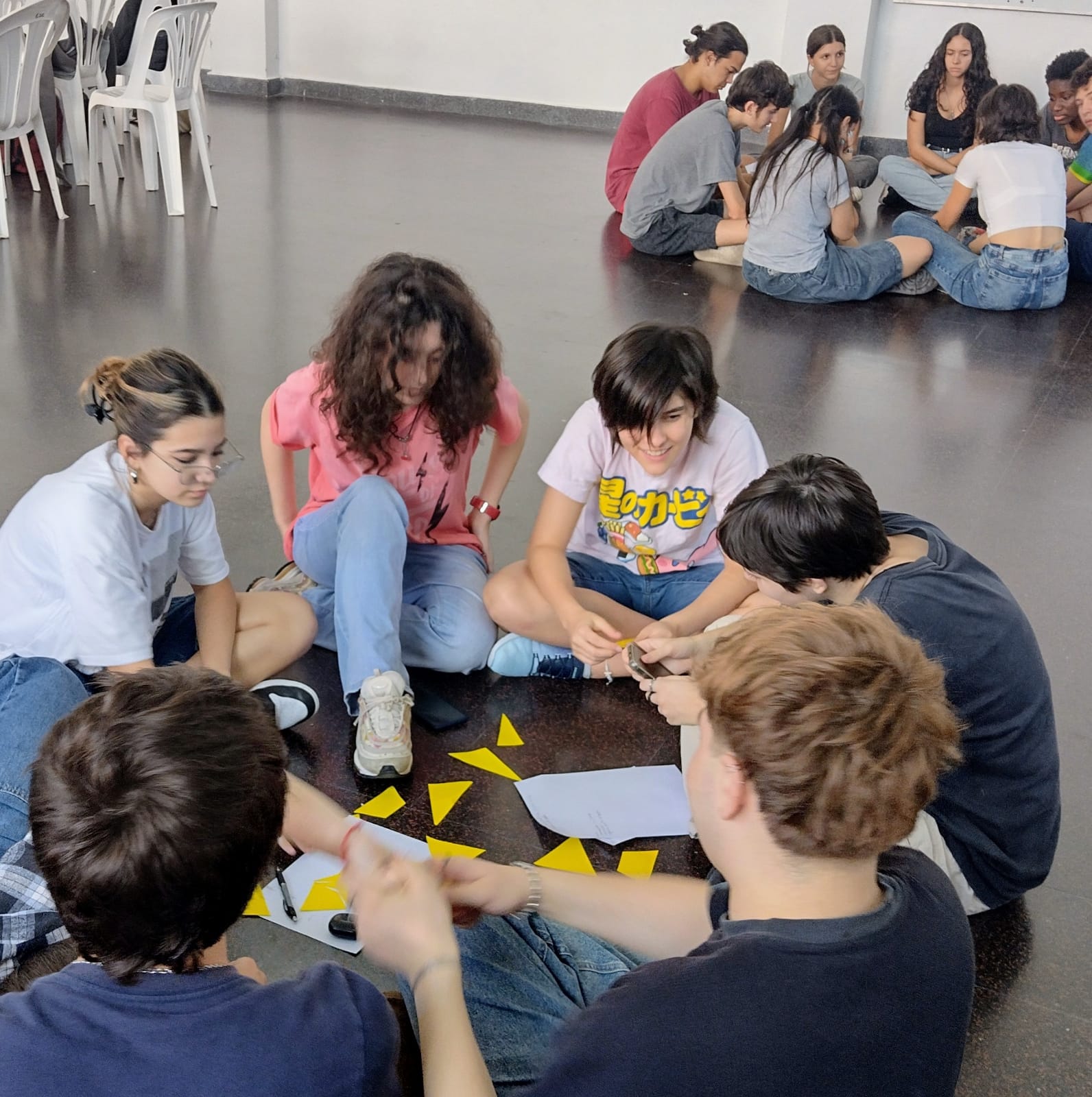
This year, we introduced IB English certificate courses for the first time. The motivation was simple: we wanted every student to have access to an international English qualification, not just DP candidates.
It is still too early to measure the impact on enrolment, aspirations or outcomes, but we see this as an important step towards widening access and building confidence in international learning pathways.
Balancing the IB and the National Curriculum
One of our greatest strengths and challenges is running the DP alongside Argentina’s national curriculum.
Students graduate with both the national bachillerato qualification and the IB Diploma, across four tracks: Arts, Economics and Administration, Social Sciences, and Natural Sciences. Achieving both requires sustained effort from students and staff.
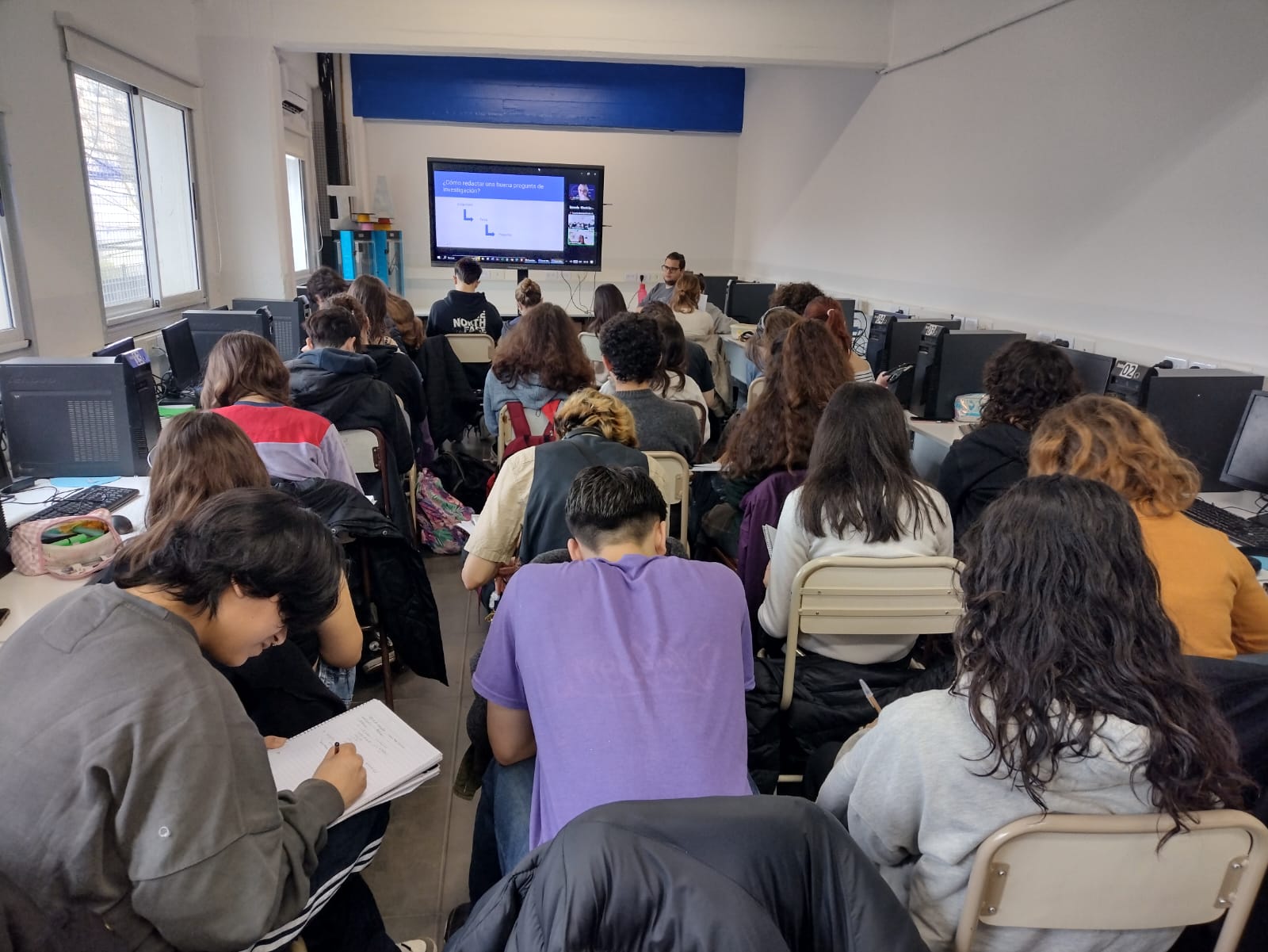
We run the DP through an extended schedule, with IB workshops before or after regular national curriculum hours. The biggest challenge is not content overlap but ensuring that all teachers consistently adopt IB teaching approaches and assessment criteria.
Supporting students academically and emotionally
Strong support systems are non-negotiable in a demanding programme like the DP.
Students are supported throughout the day by:
- The DP Coordination Team, which maintains constant and open communication
- Teachers, who offer consultation and guidance during planning hours
- The School Guidance Team (EOE), which provides emotional and well-being support
This network is crucial to student persistence and success.
Student outcomes and what we’ve learned
Our diploma attainment rate is above 90%, proving performance does not correlate with socioeconomic background. Students perform consistently, reinforcing our belief that academic excellence is not linked to privilege.
Every DP graduate so far, across seven cohorts, has continued into higher education. Our earliest graduates are now completing university, and while it is too soon to track long-term career paths, their academic transitions have been successful.
Looking to the future
Right now, our priority is consolidation rather than expansion. Infrastructure and budget constraints limit growth, but our focus is on helping more enrolled students stay the course and sit their final exams.
We are working on:
- Better schedule organization
- Stronger curriculum articulation
- Continued professional development for teachers
The IB curriculum itself continues to evolve positively, while recognition and partnerships with local universities continue to be a priority for the IB.
Takeaways
- Growth does not have to mean more full Diploma candidates. Expanding access through individual IB courses can broaden participation, deepen the programme’s presence in the school and respond more flexibly to students’ interests, capacities and life circumstances.
- The IB can thrive in public education when it is supported by strong school leadership, sustained government commitment and a shared belief that international education should be equitable.
- Student motivation is a stronger predictor of success than prior advantage, showing that the Diploma Programme can deliver high outcomes across diverse socioeconomic contexts.
- Embedding IB pedagogy across the teaching staff is more demanding than aligning curriculum content and requires long-term professional learning and cultural change within the school.
- Student wellbeing must be intentionally protected when students are navigating the combined demands of national graduation requirements and the IB Diploma Programme.
- Strengthening a programme is as important as expanding it; consolidation through better scheduling, coordination and support leads to higher completion and success rates than rapid growth.
Our experience shows that the IB Diploma Programme can be a powerful tool for public education. When access, support and belief come together, students rise to the challenge and surprise even themselves.
