

By Maha Al Bikawi, PYP Teacher, Aqaba International School, Aqaba, Jordan.
Aqaba International School is a Candidate School* for the PYP. This school is pursuing authorization as an IB World School. These are schools that share a common philosophy—a commitment to high-quality, challenging, international education that Aqaba International School believes is important for our students.
When I started using storytelling in maths, I wasn’t trying to replace anything. I just wanted to see if it would help learners engage more deeply. What I saw confirmed my belief in authentic maths learning.
In my Grade 1 class, we used Handa’s Surprise as part of our unit of inquiry under Who we are. We were exploring relationships and friendship, but very quickly, maths became part of the story. It didn’t feel like a separate lesson. It felt natural.
A story gave every learner a way in
What I noticed first was how a story creates multiple entry points for learners.
Some children connected straight away with the characters and emotions. Others focused on the fruit, the animals or the changes taking place. Some talked about what they noticed. Others acted it out or drew it.
This really mattered. It meant children with different levels of confidence in maths could all take part in a way that worked for them. No one felt left out or “behind”. The story gave them a choice, and that built confidence.
It reduced anxiety and invited curiosity
For some learners, maths can feel daunting. But when the starting point is a story, that begins to fade.
Instead of worrying about getting the right answer, the children were focused on helping Handa. They were solving a puzzle. That shift, from performance to curiosity, made a big difference.
I saw children who were usually hesitant become more willing to join in. They were more open to sharing ideas and taking risks because the learning felt safe and purposeful.
The maths had a clear purpose
One of the biggest changes was how the maths felt.
We weren’t doing subtraction because it was on the plan. We were asking real questions:
- How many fruits did Handa start with?
- What changed when an animal took one?
- How many were left?
- Would there be enough to share?
The maths had a “why”. It helped us understand what was happening in the story.
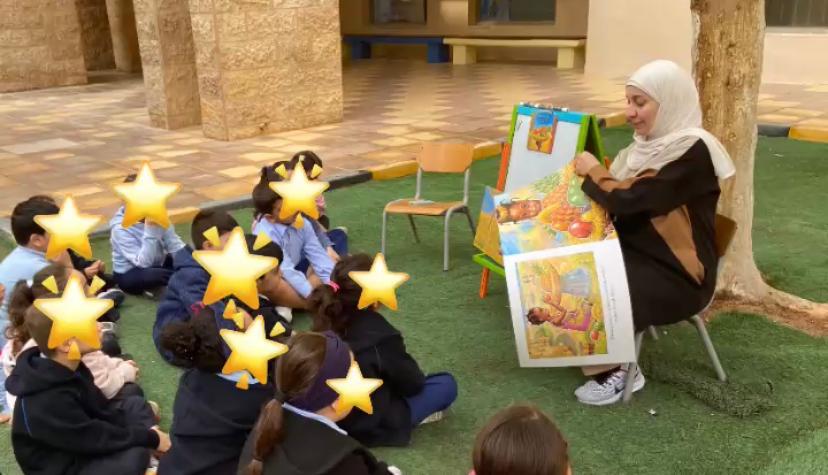
I remember one moment clearly. As we read together under the trees, a student said:
“The basket is getting lighter because the monkey is taking the fruit away.”
That insight came before we introduced any formal tools. The child had already understood subtraction as “taking away” simply by following the story.
This early conceptual understanding also gave learners a stronger foundation for later work with more abstract representations. Using the Maths Subject continuum helped me see where each learner was in their development, what the next stage could look like, and what experiences they needed to build towards it. In that way, the PRC materials supported both the children’s learning and my planning as an educator.
Acting it out made learning visible
When we began acting out the story, everything became clearer.
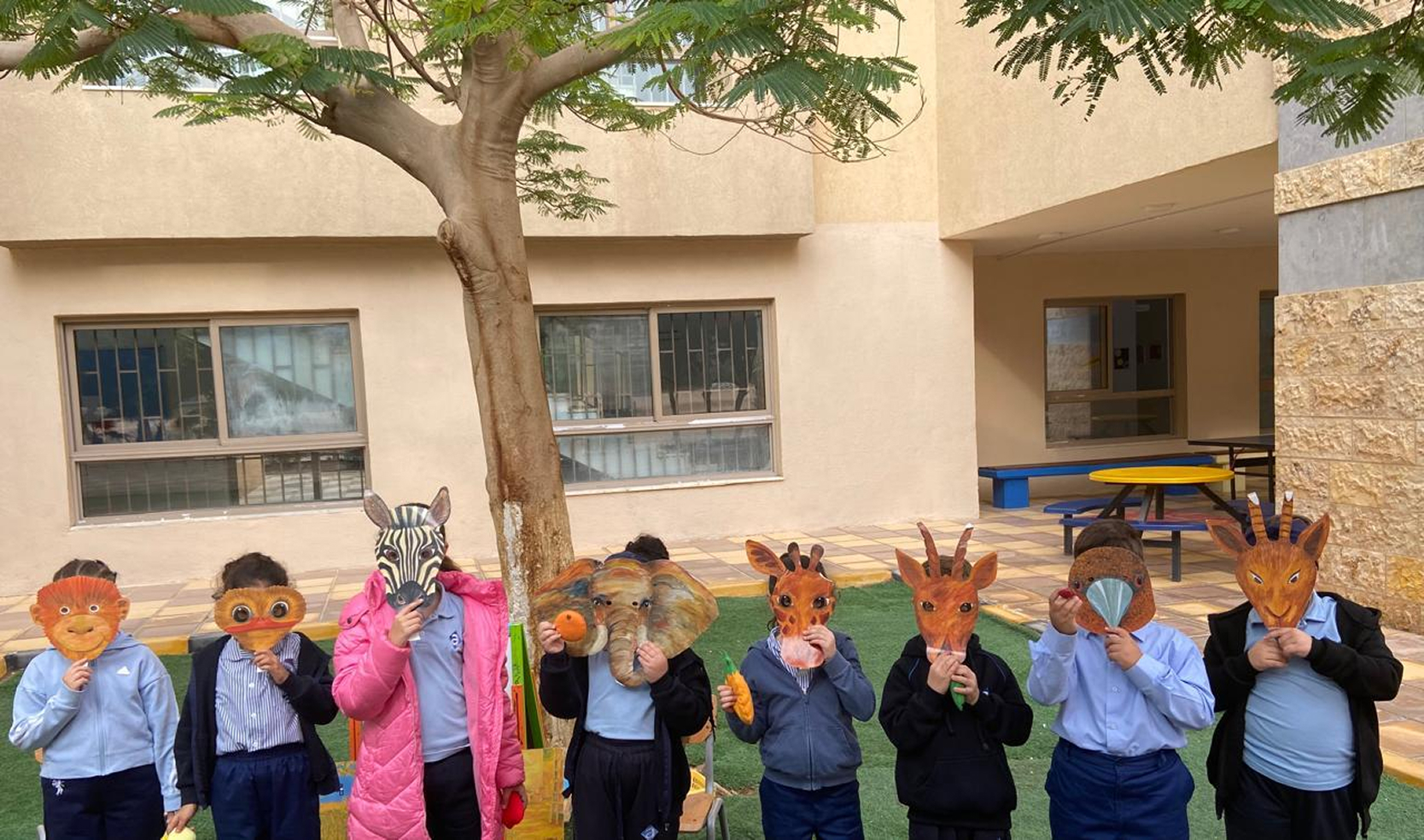
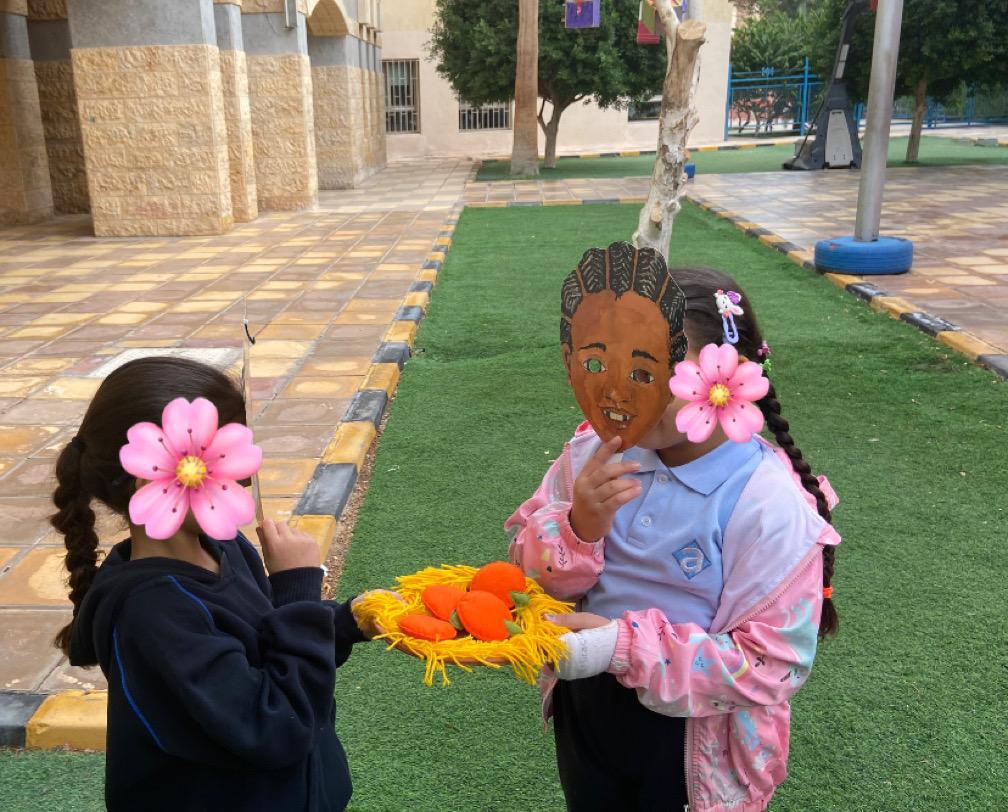
Children wore animal masks and removed fruit from a basket. Suddenly, subtraction was something you could see and feel. It wasn’t abstract anymore.
This helped learners move from listening to doing. They tested ideas, made predictions and checked their thinking. The story, the props and the movement all became tools for understanding.
Mathematical thinking came naturally
What impressed me most was how naturally mathematical thinking emerged.
Students began to:
- Ask their own questions
- Predict what might happen next
- Track how the basket was changing
- Use words like “more”, “less”, “altogether” and “remaining”
They weren’t just following the story. They were analysing it.
Some even asked deeper questions, like whether Handa would have enough fruit for everyone. That told me they were connecting maths to meaning, not just repeating ideas.
A shift in identity and confidence
Over time, I saw a real shift in how learners saw themselves.
They weren’t just completing tasks. They were solving problems, asking questions and explaining their thinking. They began to see themselves as mathematicians.
One learner, who had previously avoided maths, became one of the most engaged participants. They started predicting what would happen next and explaining their reasoning confidently.
That change, from anxious observer to confident thinker, was one of the most powerful outcomes for me.
Why this matters in the PYP
This approach reflects what I value most about the PYP.
Learning was:
- Integrated – connecting literacy, social-emotional learning and maths
- Inquiry-led – driven by student questions
- Meaningful – rooted in a real context
The maths didn’t sit separately. It emerged naturally from the inquiry. It helped learners understand the world of the story—and their own. Seeing this has encouraged me to think more intentionally about where narratives can support mathematical understanding in future units. It has also opened up conversations with colleagues about how stories, play and real contexts can help learners build confidence before moving towards more formal mathematical representations.
Takeaways
- Stories create access and support well-being: They offer multiple ways to engage, allowing every child to find an entry point while providing a supportive, narrative framework for social-emotional growth.
- Context reduces anxiety
Framing maths as part of a story shifts the focus from getting it right to exploring ideas. - Purpose deepens understanding
When maths helps solve a real problem, learners understand the “why”. - Active learning makes thinking visible
Role play, props and visual models help children connect abstract ideas to real experiences. - Inquiry builds confident mathematicians
When students ask questions and lead the learning, they take ownership of their mathematical journey, transforming curiosity into deep understanding
*Only schools authorized by the IB Organization can offer any of its four academic programmes: the Primary Years Programme (PYP), the Middle Years Programme (MYP), the Diploma Programme (DP), or the Career-related Programme (CP). Candidate status gives no guarantee that authorization will be granted. For further information about the IB and its programmes, visit www.ibo.org
